With less than seven months remaining before the USAF’s target date for ending U-2 operations, the Dragon Lady program is in limbo. All three of the overseas locations are still in place and flying missions as normal. No further retirement actions have taken place so far this year, and no plans for the final drawdown of the fleet have been made public.
The hiatus is mainly thanks to the US Congress. Although the 2025 National Defense Authorization Act was passed into law in late December without mandating any stay of execution for the Dragon Lady, the House Appropriations Committee has prevented the USAF from using any Fiscal 2025 funds to divest the program. For instance, it told the service to halt preparations to send eight aircraft to ‘boneyard’ at Davis-Monthan AFB.
However, aircraft have been parked as they approach the milestone for planned depot maintenance (PDM) – seven years or 4,800 hours. Five of these are at Beale (80-1065, -1066, -1080, -1081, and -1085). Another two are at the depot in Palmdale, where the Skunk Works was ordered to stop work on them over a year ago (-1073 and -1083). However, Site 2 did return two aircraft to Beale for further service after overhaul last year (-1067 and -1090).
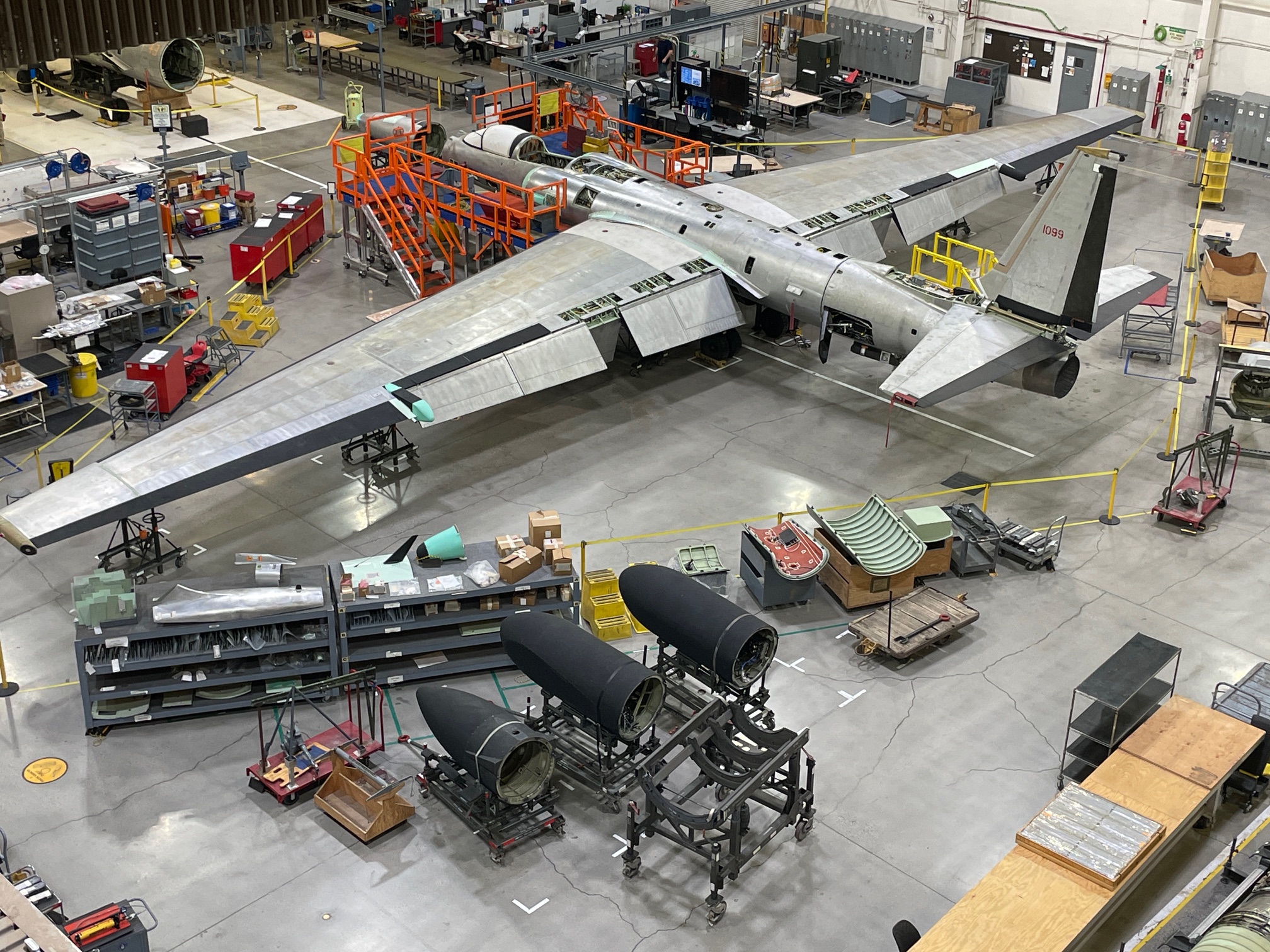
LM also last year received the funding needed to complete the rebuild of -1099. This was the jet that was badly damaged in a ground fire at Al Dhafra in 2008, and stored for many years at Warner-Robins AFB, before being moved to Palmdale in 2019. It passed final inspection last month and did engine runs last week. ADP is now awaiting instructions on whether to prepare it for return to the USAF or, more likely, fly it the short distance to Edwards AFB where it would join the two existing ER-2 science research aircraft operated by the Dryden Flight Research Center. NASA has no plans to retire them, irrespective of what happens to the USAF jets.
At Beale, the 1st Reconnaissance Squadron that has conducted U-2 pilot training and also operates the T-38 companion trainers, is still active. It graduated what was supposed to be the last two new U-2 pilots last summer. But the 9th Wing recently secured permission to interview three more prospective pilots, and two of these are now proceeding to train. There are still three dual-cockpit trainers flying at Beale: 80-1064, -1078, and -1091. The operational fleet of single-seaters now numbers 19.
There is also one jet dedicated to flight test at Palmdale – 68-10331. After much delay, it is about to start test-flying the upgraded ASARS-2B imaging radar. John Clark, until recently the boss of the Skunk Works, has suggested retaining a few U-2s for general flight test work. For instance, 331 has been flight-testing SIGINT sensors and networking architectures that have relevance to other programs.
In February last year, the USAF Museum called for expressions of interest from organizations interested in preserving a U-2 for display. But it warned that “there are many unknowns at this point about the possible availability of U-2s for static display.” That has indeed proved to be the case. Thus far, only 80-1069 has been retired for display – at the Air Force Flight Test Center Museum at Edwards.
So is a last-minute reprieve for the U-2 in prospect? I consulted two of my sources in Washington, both having had a long association with the Dragon Lady. They were not optimistic beyond the short term. They suggested that operations may be extended into the next Fiscal Year, starting in October. But with the PDM line now shut down, the fleet will dwindle as more jets have to be grounded. “I think Congress will ‘band aid’ the program for a couple of years, but no longer,” one of them said. The other noted that with the new administration looking for eight percent cuts in the defense budget, the funds required to maintain the U-2 in service for longer won’t be found.
This is despite yet another mission having been allocated to the Dragon Lady in recent months. It is flying surveillance missions along the Mexican border, as the new administration steps up efforts to stem the tide of illegal immigration into the US. This follows the unexpected but successful use of the aircraft to intercept and photograph the incursion of a Chinese surveillance balloon last year.
These missions have been flown from Beale, where the 99th RS maintains an operational capability, as well as supporting the overseas locations in Cyprus, Korea and the UK. Some months ago, I suggested that the USAF should structure a slimmed-down U-2 operation based at Beale, which could deploy to those and other locations as needed.
 Dragon Lady Today