The 9th Reconnaissance Wing hosted the leadership of Air Combat Command (ACC) and held a readiness exercise last month, although actions to retire the U-2 Dragon Lady have continued. The wing’s public affairs office (PAO) said that the visit aimed “to strengthen the connection between local missions and ACC priorities.” It also posted a detailed story describing the aircraft’s unique sensor capabilities.

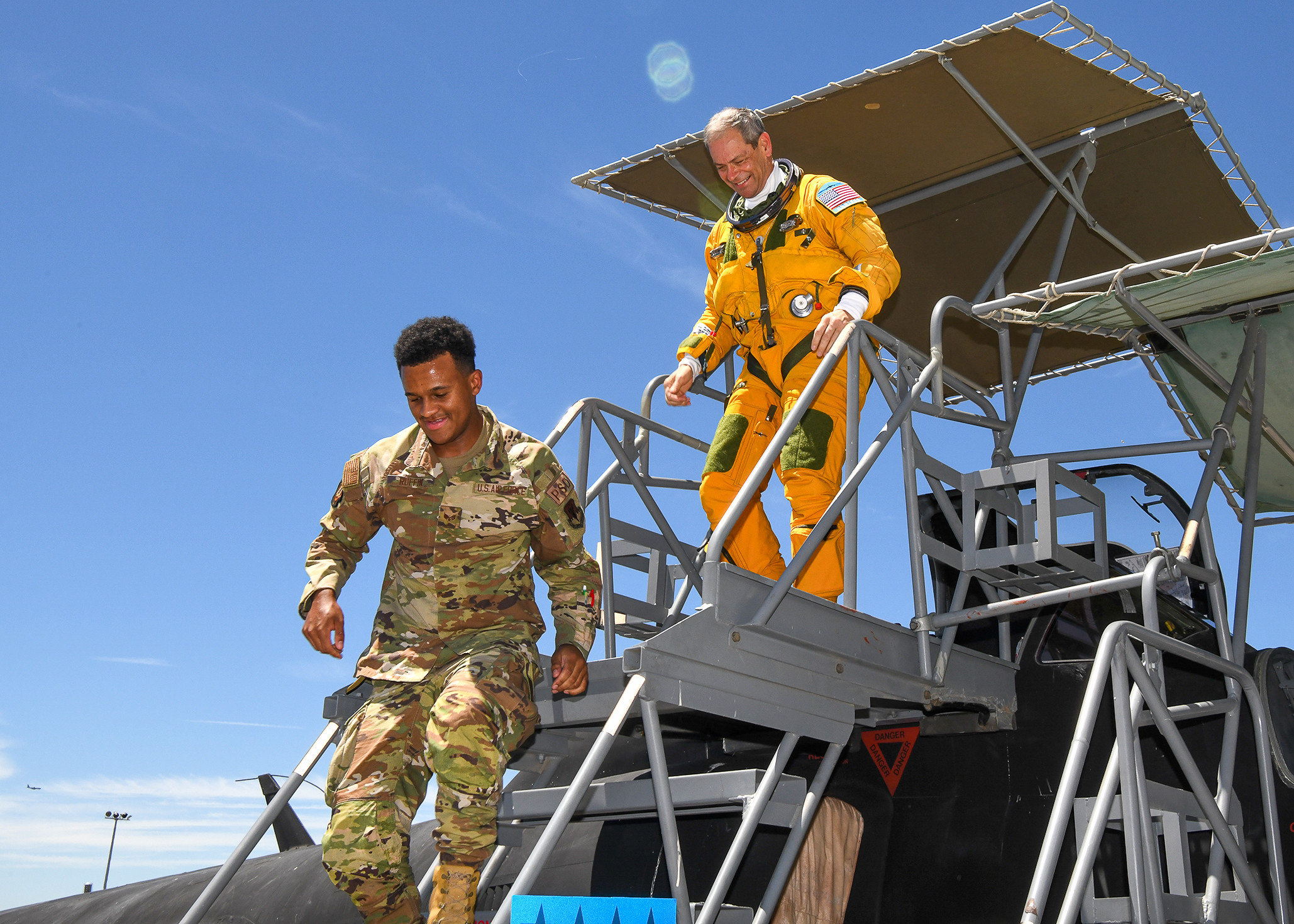
Gen Ken Wilsbach, the ACC commander, and CMSgt David Wolfe, the command chief, and their spouses, made a three-day trip to Beale that included a flight in a U-2ST for Wilsbach (above left), while Wolfe was flown in a T-38 (above right).
“Flying in the U-2 was an incredible experience that gave me a profound appreciation for its reconnaissance capabilities,” Wilsbach said. “We continue to excel in intelligence-gathering, which is vital for our national security,” he continued. Wolfe spoke to a large gathering of Beale airmen.

Did the visit signify a late push-back by ACC against HQ USAF’s plan to retire the U-2 next year? That is not clear. A consultant to the USAF on ISR told me that “it will really come down to someone directing the USAF to keep it flying. I believe that there will have to be congressional language in the form of a signed legislative bill.”
But although the House of Representatives has inserted language in its markup of the Pentagon’s Fiscal Year 2025 budget request that would prevent U-2 retirement, there was no sign at the time of writing, that the Senate will follow suit. However, a Congressionally-mandated report from the vice-chairman of the Joint Chiefs of Staff, describing the views of the six combatant commanders (COCOMs) on whether the USAF’s plan to retire airborne ISR capabilities poses an operational risk, is now overdue. In previous attempts to divest the U-2, the COCOMs have joined with Congress to defeat the plan.
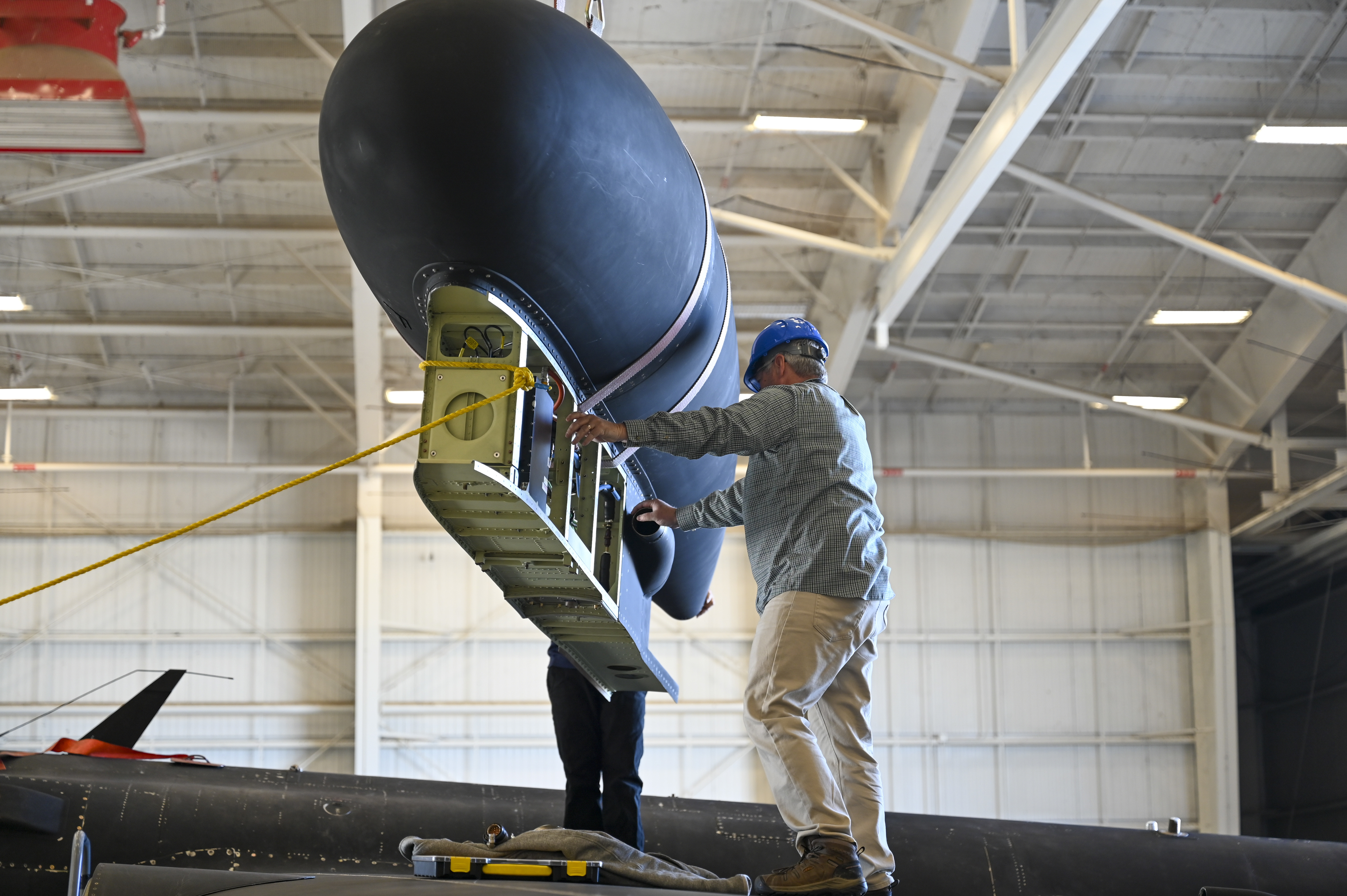
The “D-word” (divestment) is absent from any publicity emanating from Beale, although the PAO has reported on the retirement of some U-2 aircraft there. In its other recent posts, the PAO described the Ready Dragon exercise that was designed “to test the wing’s ability to rapidly deploy and support down range” . Two weeks later, it described “The Eyes and Ears of the U-2” in a detailed review of the aircraft’s ASARS-2 radar, SYERS multispectral sensor and ASIP SIGINT system, plus the electronic warfare system (EWS) and the satellite datalink that sends their ‘take’ for processing, analysis and dissemination.
During a visit to Beale last month, I witnessed the first solo flight of the last new U-2 pilot in training, under current plans. He and a fellow trainee will be honored in a traditional solo party in the wing’s Heritage Room on 2nd August. All members of the “U-2 Brotherhood” are invited. The party may extend to a second day of events.
I also visited the U-2 Programmed Depot Maintenance (PDM) facility depot at Palmdale, where the Skunk Works has been told to stop work on the overhaul of three jets (80-1073, -1083 and -1099). The USAF has permitted the completion of the other two aircraft in PDM there (80-1067 and -1074). But they will be delivered by the end of July, after which there will be another round of layoffs, I was told. Many in the U-2 program believe that once the PDM capability is lost, it will be near-impossible to keep the jet in service. “The USAF is trying its best to make its decision irreversible,” an informed Congressional source commented.
 Dragon Lady Today
Without a doubt, this is the dumbest decision the WOKE commanders have ever attempted to make. When every COCOM wants the product the article downlinks to them and the Congress reluctantly climbs on board to support the program, why in the world do these less than capable idiots want to kill the program. Asking for the entire U-2 community. You know how to find me.
LikeLike
The U2 was to be in existence for not more than a year or so and still flys today – why take it out of the inventory. The B52 was a prototype in 1954 and because of the U2 became the bomber of choice because of the U2. I was with the U23 from 1956 – 1960.
LikeLike
I agree that the B-52 and U-2 are cheaper to operate compared to the B-2 and now-retired SR-71. However, the USAF has a gut feeling that the U-2’s lack of stealth makes it difficult for it to overfly heavily defended territory with impunity, something which the “RQ-180” can do thanks to stealth.
The US Air Force could have ordered the AQM-91 Firefly reconnaissance UAV into production and use the U-2R as merely an interim type pending deployment of the AQM-91, because the Firefly was designed to have enough range to fly deep into Chinese airspace and overfly the Chinese nuclear weapons test site in Lop Nur. In this way, the US Air Force in the late 1980s and 1990s would have ended up with the AQM-91, the Quartz, and a trio of SR-71s for airborne strategic reconnaissance needs.
LikeLike
It would be wonderful to think that some classified new platform was ready to do the ISR mission better, faster, and/or safer than the U-2. But if that were the case, wouldn’t the COCOMs be perfectly happy to let the Dragon Lady fly off into the sunset? I am afraid that we are not just losing an extremely versatile aircraft, but also giving away a critical, strategic capability.
LikeLike
The “higher and faster” credo which dominated the minds of aerospace engineers in 1958-1970 when it came to planning a successor to the U-2 and SR-71 rang hollow near the end of the Cold War when the CIA and NRO tailored the Quartz program to develop a replacement for the SR-71 and U-2 which would be simply unmanned, stealthy, and subsonic. The US Air Force joined the Quartz program in 1989/1990 a few years after shelving a research program begun in the late 1970s under which Lockheed, Boeing, and few other aircraft manufacturers worked out designs for a hypersonic spyplane when it realized that scramjet and combined-cycle turboramjet tech was immature.
Yes, the U-2 of today is still a strategic recon platform as it was during the Cold War, but it is not stealthy despite its cheaper operating costs, and Northrop Grumman’s “RQ-180” flying wing has been built to compartmentalize the ability to overfly heavily defended airspace with the strategic reconnaissance abilities of the U-2S fleet and SR-71.
LikeLike