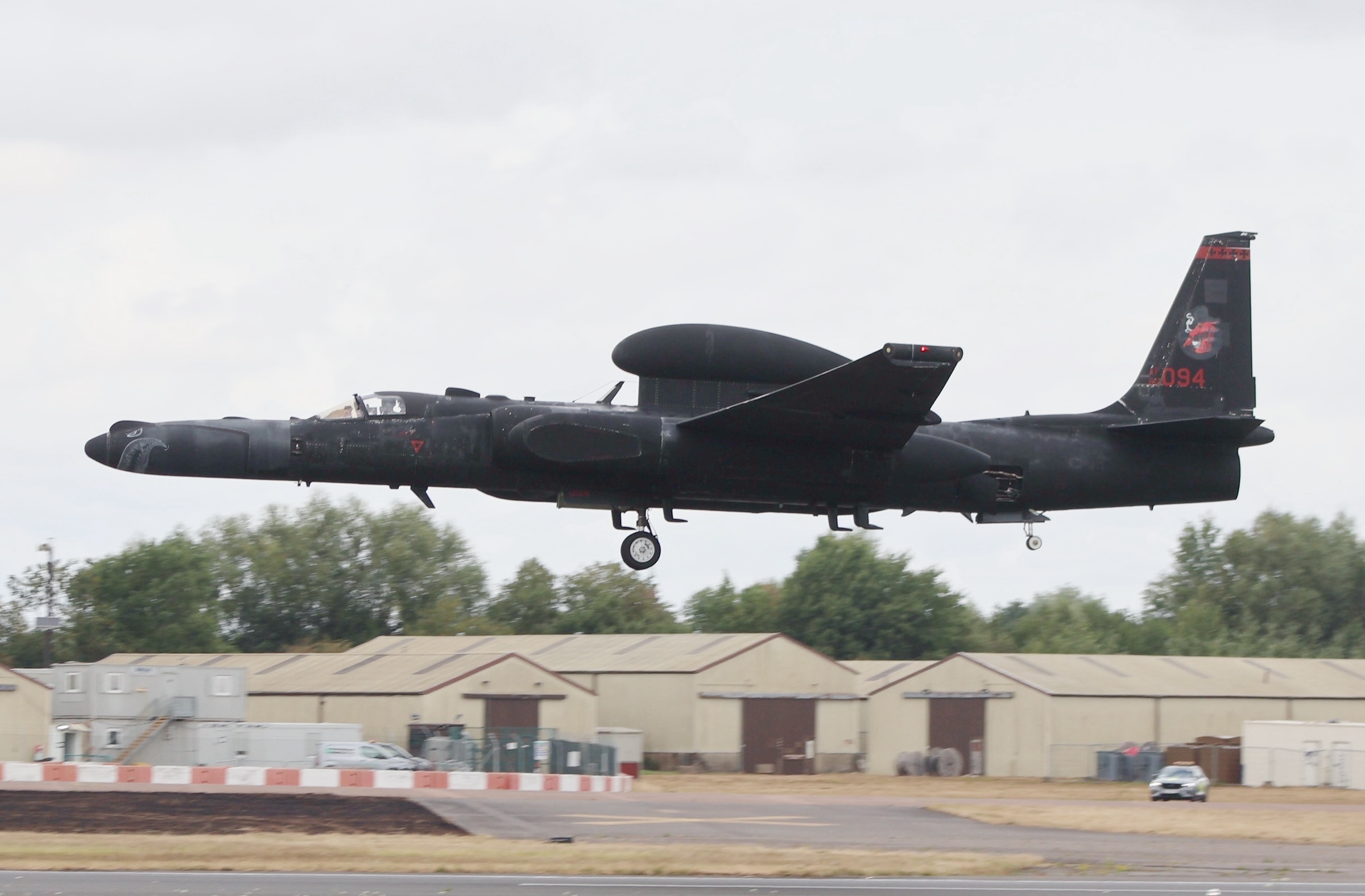
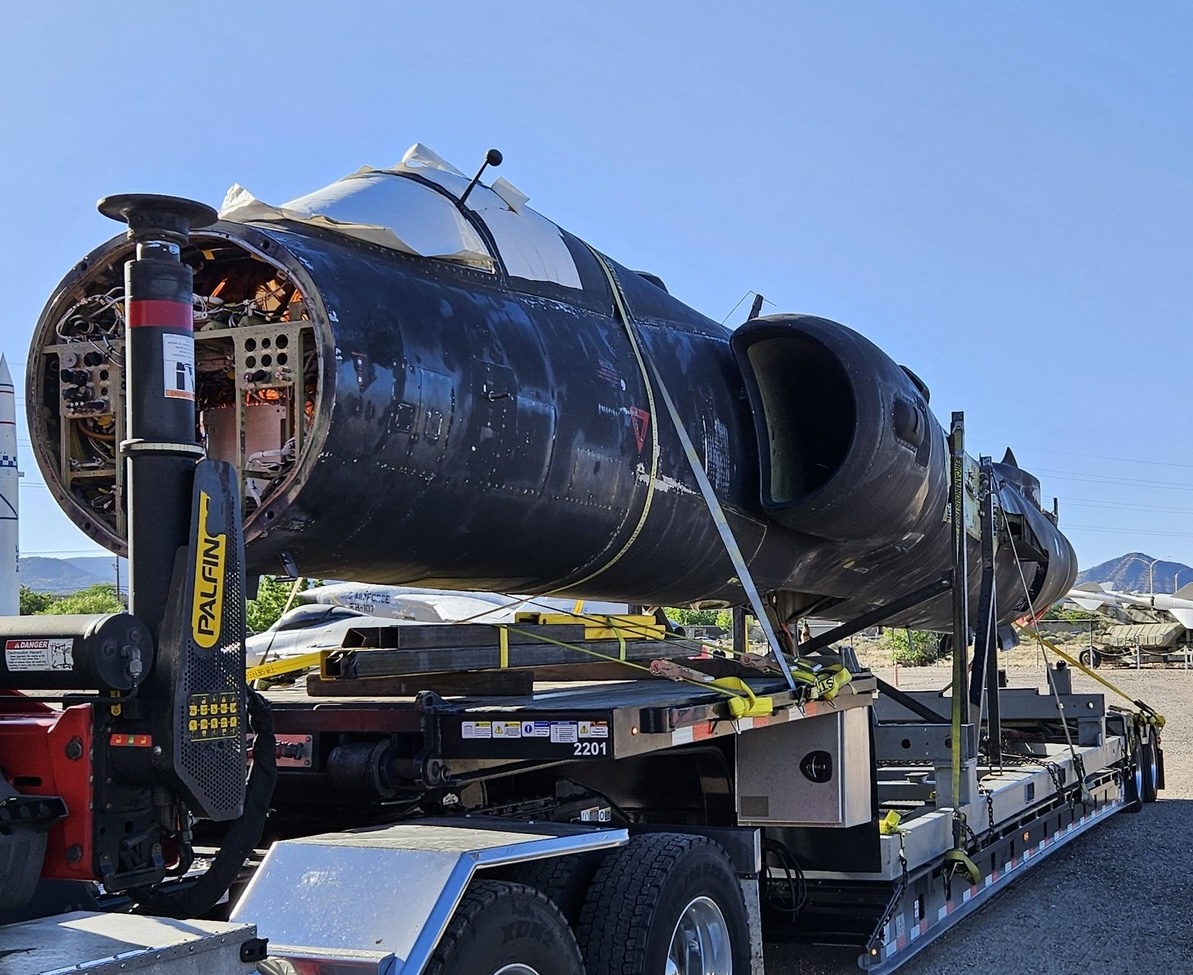
The US Air Force has again made clear its desire to retire the U-2. Three aircraft have already been disassembled and trucked to the “boneyard” at Davis-Monthan AFB. More have been parked at Beale. The first to be allocated to a museum is now in Albuquerque, NM. But at the same time, new pilots are being trained, depot maintenance on two jets has resumed, and some new upgrade and support contracts have been advertised, issued or publicized.
In its annual posture statement to Congress released in late May, the USAF stated that “after its one-year extension granted in May 2025, the (Fiscal Year 2027 budget request) proceeds with the divestment of the U-2 by the end of FY27 to avoid significant costs due to airframe age and fatigue.” The one-year extension was forced upon the service by disquiet in Congress and by the Combatant Commanders (COCOMs). Supporters of retaining the U-2 were hoping that the USAF would provide funding to continue operations until FY2030. That has not happened, although Congress and the COCOMs could yet intervene again to keep the Dragon Lady flying beyond the end of September next year.
UPDATE 11th June 2026: This has now happened. Yesterday, the defense subcommittee of the House of Representatives released its markup of the FY2027 defense spending bill. It said that “None of the funds appropriated or otherwise made available by this Act may be used to divest or prepare to divest more than two U–2 aircraft.” It also provided $81 million “for U-2 programmed depot maintenance to fully restore four aircraft.”
The USAF’s reference to airframe age and fatigue is puzzling, since most of the jets have plenty of hours remaining. Yes, most of the U-2s are now around 40 years old, and four made their first flights in the late 1960s. One of the latter (68-10329) has logged nearly 35,000 hours. However, because the U-2 spends most of its time in the benign atmosphere at 70,000ft and above, the airframes are not subjected to much of the turbulence found at lower altitudes. Moreover, their unique gust alleviation system mitigates for the aircraft’s low structural design limit (+2.5g) by raising the trailing edge control surfaces to unload the wing during turbulence.
In one of the strange current anomalies regarding U-2 status, the Skunk Works has only now been funded to investigate airframe fatigue. The flight test aircraft (68-10331) is being fitted with strain gages and is expected to fly again in August in an effort named Loads/Environmental Spectra Survey (L/ESS). The USAF made a proposal to conduct an L/ESS a few years ago, but in the end, it was never funded. Some years before that, there was a Service Life Evaluation and an Aircraft Structural Integrity Program (ASIP). The ASIP found that the fatigue life was 75,000 hours.
In any case, the U-2 airframes are thoroughly examined every seven years or 4,800 hours (whichever comes first) during the major overhaul known as Programmed Depot Maintenance (PDM). This was routinely done by the Skunk Works at Palmdale, until the company was told to stop PDM work in January 2024 because of the impending retirement. As a result, 11 aircraft are currently parked at Beale AFB, having reached an overhaul milestone. The current fleet now numbers only 16 active jets, including two two-seat U-2ST trainers.
But now, PDMs on the two aircraft that were subject to the stop-work order (80-1073 and 80-1083) are going ahead. Their fuselages have been trucked to Beale where the work will be done by a “satellite” crew organized by the U-2 program office in the Skunk Works. The wings and empennages will be done at Palmdale. This is a multi-million dollar effort, on aircraft that may see less than one year’s service, if the USAF gets its way.
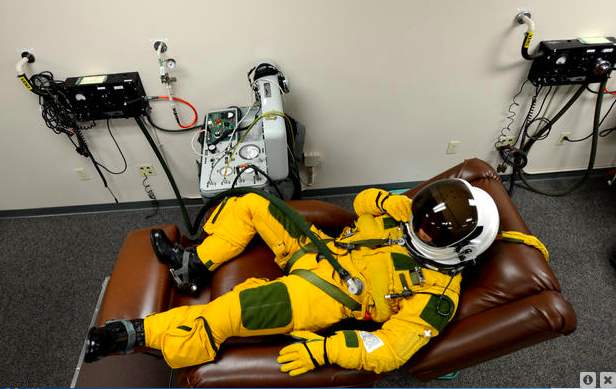
Meanwhile, an investment in new pilots is also being made. Two are currently nearing the end of their training, and three more are arriving soon for a course that usually takes about nine months. They may therefore only be qualified in time for about six months of operational flying, before the axe falls on the program. I have been told that there is some logic to this since, if the U-2 does get extended again, the 9th Wing wants to respond to any tasking with the maximum possible availability of pilots. A significant number of qualified pilots have left the U-2 squadrons recently, mostly for the airlines. Incidentally, the Skunk Works recently advertised for a U-2 test pilot.
It has been reported elsewhere that, in its FY2027 budget request, the USAF justified divestment of the U-2 for different reasons. The request is said to propose redirecting nearly $1.4 billion “toward the development of high-altitude autonomous systems and multi-domain sensing systems.” The former is probably another veiled reference to the classified Penetrating ISR (P-ISR) UAV that the 9th Wing has been operating in secret for some years now, and which I have discussed in various previous posts. The latter is probably a reference to satellite ISR, also covered here previously. The FY2027 Space Force budget request includes $1.1 billion for further development of “Moving Target Indicators”, and $1.5 billion for “Next Generation Overhead Persistent Infrared”
Regardless of whether the “nearly $1.4 billion” is an accurate representation of the cost of U-2 program, it is worth noting that such an amount is peanuts in comparison to the total USAF budget request for FY2027, which is $338.8 billion, a whopping 38 percent increase.


Thanks Chris. Excellent update as usual.
LikeLike