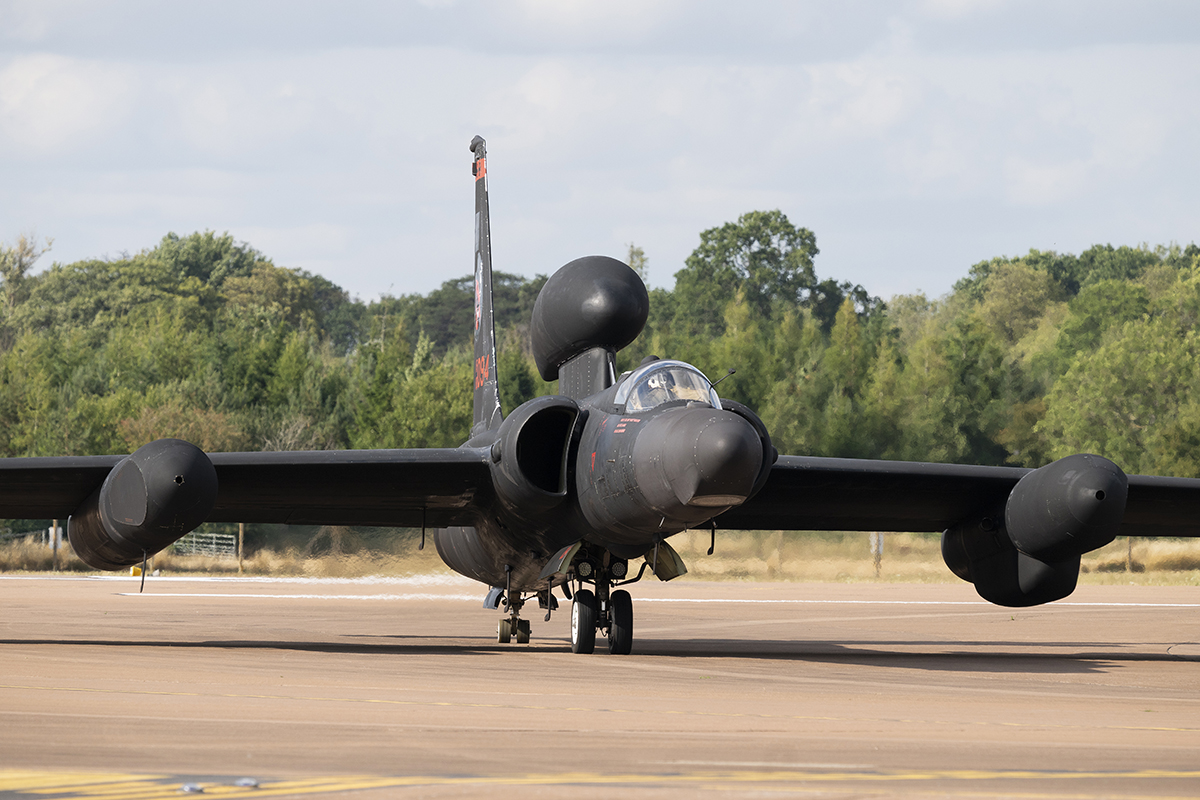
Supplemental funding by Congressional direction will keep the U-2 in service for at least another year, as I noted in a previous post. A budget for FY2027 is now being finalized, as an unfunded requirement. But the USAF leadership seems unlikely to alter its stance that the Dragon Lady “is no longer viable for future high-end conflicts.” It also says that the fleet is increasingly expensive to maintain due to its age.
It is beyond dispute that the U-2 is vulnerable to Integrated Air Defense Systems (IADS) that include Russia’s S-400 or China’s HQ-9B surface-to-air missiles. But there are plenty of countries that contain targets of interest for the US and its allies, which do not have such sophisticated systems. Iran is one of these, especially after the recent war, when the US and Israel significantly degraded its air defenses.
Of note, the initial list of US aircraft involved in the air campaign against Iran that was issued by CENTCOM, did not include the U-2. But subsequent lists added the Dragon Lady. This confirms that the aircraft still had a role to play in such a conflict. Indeed, I have been told that a new SIGINT sensor on the U-2 known as the “High Altitude Platform” (HAP) has proved valuable against Iran. It is carried in addition to the U-2’s standard Airborne Signals Intelligence Payload (ASIP), suggesting that it offers some unique monitoring capabilities.
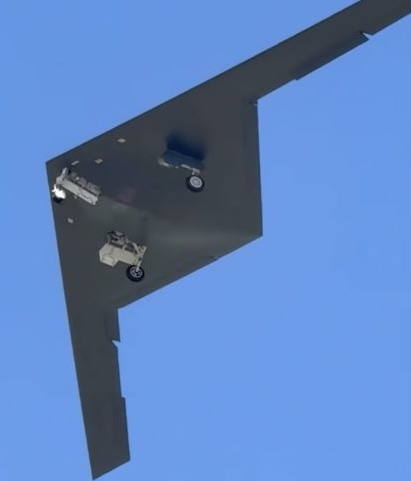
The USAF says that financial resources to keep the U-2 flying should be “diverted to the development of high-altitude autonomous systems”. This is presumably a reference to the still-highly classified subsonic UAV produced by Northrop Grumman, which is incorrectly referenced as the RQ-180 in most public accounts. It is best described in open sources such as this website, as the Penetrating ISR (P-ISR) platform. It’s not clear why the P-ISR still needs development, when the prototype flew 18 years ago, and it entered service in 2017. (The USAF may also be referring to a supersonic jet which includes an ISR mission, that is rumored to be undergoing a troubled development by Lockheed Martin. The company has written off over $2.1 billion on a classified program at the Skunk Works since 2024.)
Anyway, the P-ISR was evidently used in the Iran War. It made a rare – and possibly unplanned – daytime appearance on final approach to a forward operating location at Larisa airbase in Greece in March. It is possible that a concept of operations has been, or could be developed, whereby the P-ISR is employed in the initial stages of a conflict, before being joined or replaced by the larger-payload U-2. The 9th Wing is best placed to further this concept, since it operates both types.
Reconnaissance satellites offer another partial replacement for the Dragon Lady. I wrote an extensive analysis of ISR in the space domain here. Suffice it to say here that deficiencies remain. Despite the improvements in resolution and revisit rates of the ever-increasing constellation of commercial satellites, they still cannot “retain custody” of targets eg constantly monitor important targets such as mobile ballistic missile launchers, unlike an orbiting U-2. As for the highly-classified ‘exquisite’ systems operated by the National Reconnaissance office (NRO), they cannot provide such coverage either. Moreover, ISR professionals have told me that the tasking, processing, exploitation and dissemination (TPED) of space reconnaissance is not mature. Further, the Government Accountability Office (GAO) reported last month that the DOD and the Intelligence Community (IC) had still not clarified roles and responsibilities for the acquisition of commercial satellite imagery.
Aside from Iran, in recent years the U-2 has demonstrated its value elsewhere. It has monitored Mexican drug cartels, and photographed the Chinese SIGINT balloon that penetrated US airspace. At a change of command ceremony for the 99th ERS based at Fairford last June, it was stated that the U-2 had successfully flown against “Europe’s hardest targets”; that it was “NATO’s primary source for airborne imagery”; and that “collection against an elusive adversary target was briefed directly to the President.”
“The global demand (for the U-2) has not relented, even though we are trying to go through this divestment process,” said Lt Gen Thomas Hensley, the 16th Air Force commander. He was speaking at another change of command ceremony only days later, this time at Beale AFB, when Col Mick Cameron took command of the 9th RW from Col Keegan McLeese.
Whatever may be the opinion of officers lower down the U-2 command chain, I have been told that “there are people right now at HQ ACC (Air Combat Command) who want it dead.” And a knowledgeable source on Capitol Hill told me that “the sand is eroding from underneath the program, I don’t know how many more years House appropriators will keep it alive.”
The USAF says that “continuing to operate the U-2 fleet would require a significant investment to address systemic issues, including diminishing manufacturing capacity, material shortages, and safety risks inherent in the aging platform.” Some of that may be true, but the description could equally apply to, for instance, the B-52 or the RC-135, two types that the service intends to retain for many years to come.
In recent years, the USAF has variously stated that the U-2 program costs $1.4 billion a year, that its retirement would save $600 million, and that the immediate savings from retiring the aircraft in FY2027 would be $157 million, as the fleet is run down. In fact, I have been told by two informed sources that the current cost of operating the now-reduced fleet of 16 jets, is about $400 million.
That seems like good value to me.


Is there a form of the Itek IRIS II Optical Bar Camera still in use today in the U-2?
LikeLike
No, they were retired a few years ago
LikeLike
Hello Chris,I continue to enjoy your newsletters! I
LikeLike